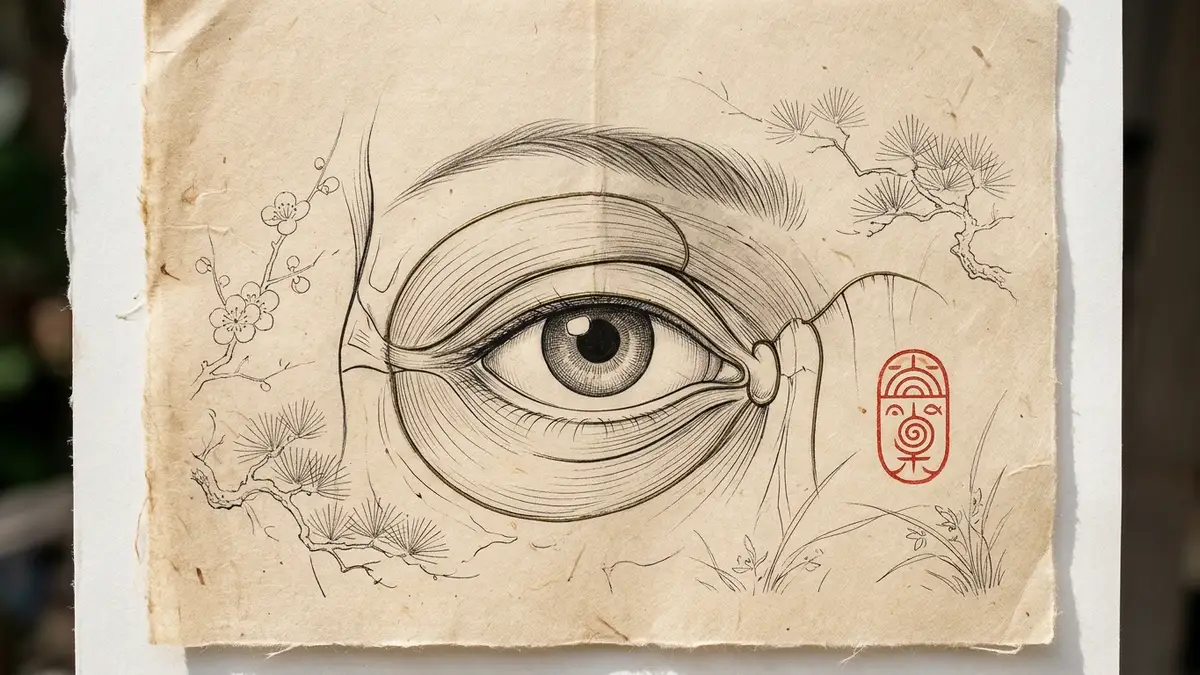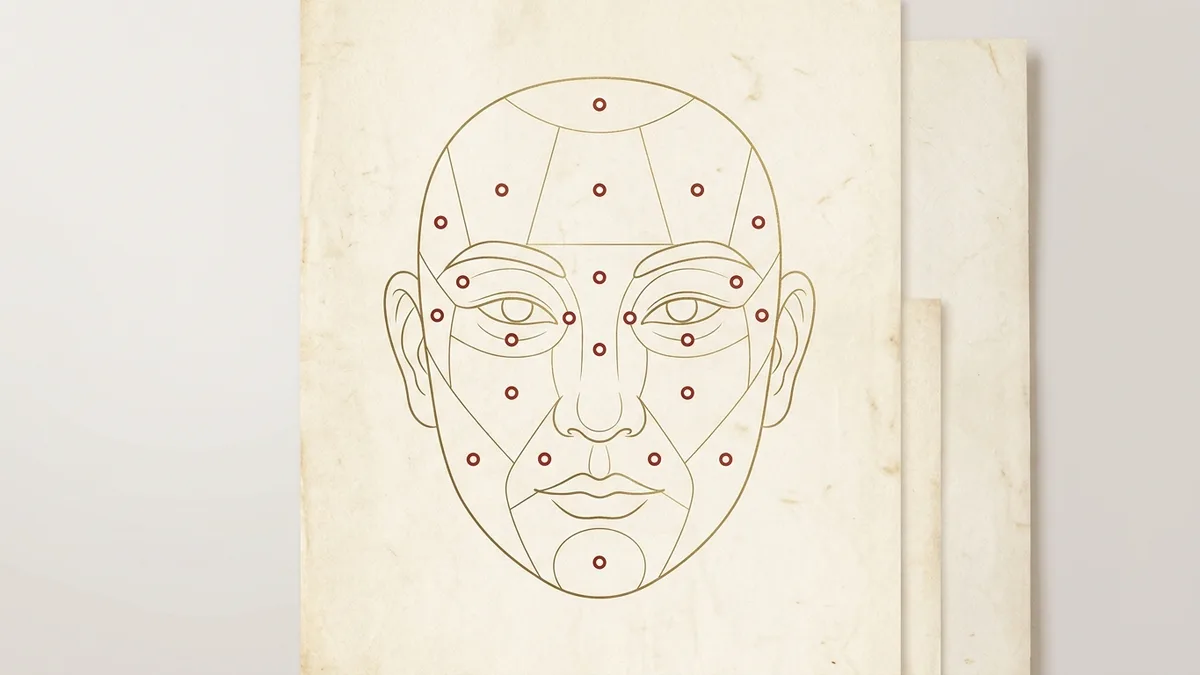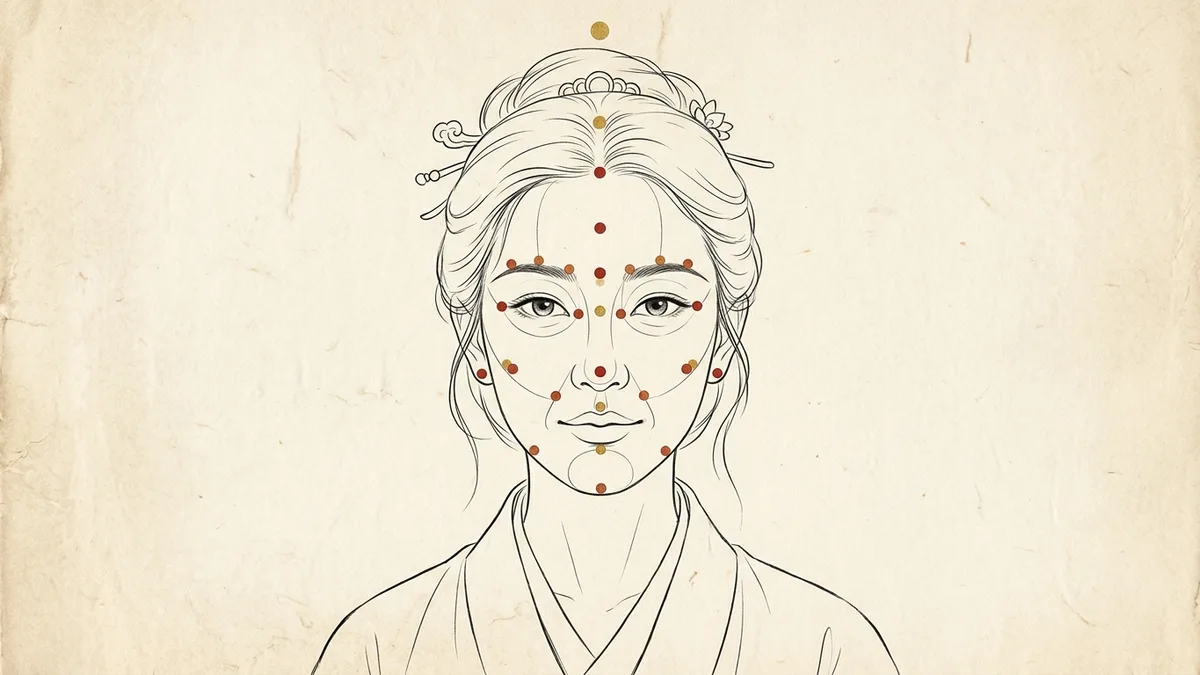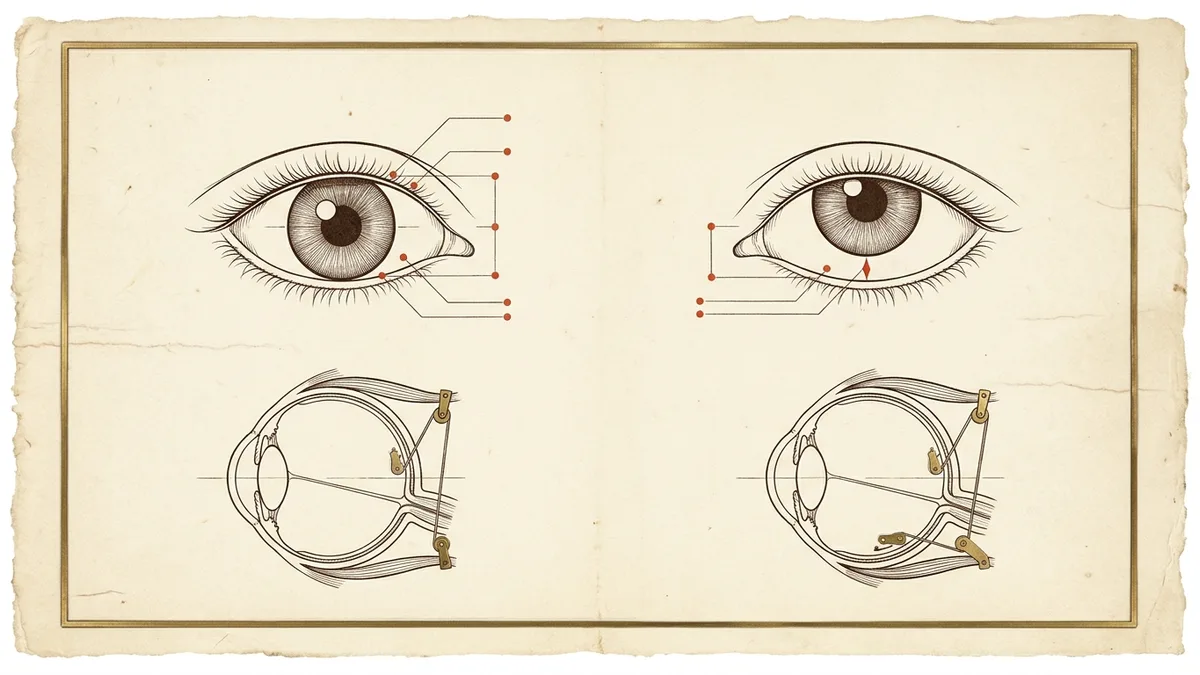
In classical East Asian physiognomy (Mian Xiang / 面相), the eyes serve as the Jian Cha Guan (监察官), or Observing Officer, providing the clearest visual record of attention and composure. Among classical eye classifications, few subjects attract as much contemporary curiosity as Sanpaku—the Japanese reading of the Chinese term San Bai Yan (三白眼), meaning "three-white eyes." During a neutral, eye-level gaze, white sclera normally appears on only two sides of the iris: the medial edge toward the nose and the lateral edge toward the temple. When an unmistakable strip of sclera remains visible along a third edge—either beneath or above the iris—classical texts record the pattern as three-white eyes.
Popular internet commentary often reduces San Bai Yan to fatalistic folklore or sensationalized warnings. Traditional manuals such as Ma Yi Shen Xiang (麻衣神相) and Shen Xiang Quan Bian (神相全编), by contrast, treat scleral visibility as an observational clue that must be weighed against eyelid tone, head posture, and gaze steadiness (Shen / 神). Separating genuine resting anatomy from camera tilt, expression, and momentary fatigue is essential before drawing any classical conclusion.
Classical Taxonomy: Yin vs. Yang Sanpaku
Classical treatises divide three-white eyes according to whether the third visible scleral margin sits below or above the iris. Each placement carries distinct structural mechanics and behavioral associations.
Yin Sanpaku (Xia San Bai / 下三白)
When white sclera shows clearly beneath the inferior border of the iris while the head rests level and the gaze points straight ahead, classical physiognomy labels the eye Xia San Bai (下三白), widely known today as Yin Sanpaku. Anatomically, the upper eyelid drapes normally over the top one to two millimeters of the cornea, while the lower lid margin sits slightly below the inferior corneal border, leaving a crescent of white visible.
In traditional observation, Xia San Bai reflects heightened environmental alertness, strong self-reliance, and rapid vigilance. The gaze conveys an active scanning quality, as though the observer continuously registers shifts in tone or surroundings. Classical writers also recognize that inferior scleral exposure fluctuates with daily recovery. During stretches of heavy mental exertion, irregular sleep, or prolonged close-range focus, subtle slackness or tension along the lower lid can widen the visible white margin. Within this observational system, readers cross-check the neighboring Health Palace (Ji E Gong / 疾厄宫) across the upper nasal bridge to evaluate everyday vitality, stamina reserves, and rest rhythm.
Yang Sanpaku (Shang San Bai / 上三白)
The less common counterpart, Shang San Bai (上三白) or Yang Sanpaku, occurs when a horizontal band of sclera remains visible above the upper rim of the iris while the lower lid meets or slightly overlaps the bottom of the cornea. Because normal resting levator muscle tone places the upper eyelid gently over the top edge of the iris, genuine superior scleral visibility in full repose is considerably rarer.
Classical commentators associate Yang Sanpaku with concentrated outward drive, swift reactivity, and firm personal boundaries. Where Yin Sanpaku suggests watchful self-protection, Yang Sanpaku signals forceful assertion and an unyielding stance under pressure. Even so, experienced practitioners warn against diagnosing Shang San Bai from a single glance without ruling out raised eyebrows, startle tension, or a chin-up head angle.
Four-White Eyes (Si Bai Yan / 四白眼) and Ocular Spirit (Shen)
When sclera becomes visible simultaneously around all four borders of the iris, manuals classify the appearance as Si Bai Yan (四白眼), or four-white eyes. In calm daytime repose, circumferential scleral exposure is unusual; far more often, it appears briefly during surprise, intense concentration, or bright flash photography. Classical masters stress that Shen (神)—the coherent stillness and clarity of the gaze—matters far more than scleral geometry alone. Mild inferior scleral show paired with steady, composed Shen reads as measured awareness rather than agitation.
Classical vs. Anatomical Comparison of Scleral Patterns
| Feature | Classical Name | Anatomical Cue | Traditional Observation |
|---|---|---|---|
| Balanced Neutral Gaze | Er Bai Yan (二白眼) | Upper lid covers 1–2 mm of upper iris; lower lid meets inferior border | Measured energy output, steady concentration, balanced rest rhythm |
| Inferior Scleral Show | Xia San Bai (下三白 / Yin Sanpaku) | Exposed white crescent visible beneath the iris in level fixation | Heightened vigilance, self-reliant focus, sensitivity to depleted rest rhythm |
| Superior Scleral Show | Shang San Bai (上三白 / Yang Sanpaku) | Exposed white band visible above the iris while lower lid meets cornea | Intense outward drive, rapid reactivity, uncompromising boundaries |
| Circumferential Exposure | Si Bai Yan (四白眼 / Four-White) | Sclera visible above, below, and beside the iris at the same time | Acute alertness or momentary startle; must be separated from wide-eyed pose |
Anatomical Reality vs. Head Tilt and Camera Angle
The most frequent mistake in modern face reading is confusing optical perspective with resting facial anatomy. Because the eyeball rotates like a sphere within the orbit while the eyelids remain tethered at the inner and outer corners, even a slight mismatch between head pitch and gaze direction alters scleral exposure immediately.
How Chin Pitch Creates False Sanpaku
Imagine a subject tucking their chin downward by ten degrees while looking upward toward a camera held above eye level—one of the most common poses in smartphone photography and portrait cinematography. As the globe rotates upward to meet the lens, the iris climbs toward the upper lid and pulls away from the lower lid margin, revealing a prominent band of white sclera below. Place that identical person in the Frankfurt horizontal plane—where the top of the ear canal aligns horizontally with the lower orbital rim—and the inferior sclera often disappears.
The reverse tilt produces false Yang Sanpaku. Raising the chin slightly while glancing downward at a monitor, book, or low-mounted camera causes the eyeball to rotate downward. The lower lid covers the bottom of the iris while the upper lid lags slightly behind, exposing superior sclera. Assessing San Bai Yan from candid upward or downward angles routinely creates false positives.
Structural Lid Baseline vs. Transient Strain
Even in level posture, normal human variation explains many instances of mild scleral show. Individuals differ in vertical aperture height, cheekbone support beneath the lower rim, and natural lower-lid attachment. A tall palpebral opening or shallow infraorbital contour can leave a thin inferior margin visible throughout adulthood without indicating strain. By contrast, harsh overhead lighting, dry eyes, contact-lens discomfort, or habitual brow lifting temporarily widens the aperture for minutes or hours. In Chinese Face Reading, durable traits are never inferred from momentary discomfort or expressive widening.
Protocol for Accurate Observational Assessment
To separate true structural San Bai Yan from camera geometry or passing tension, apply a methodical four-step review:
- Align the Head Horizontally: Seat the subject in soft, even frontal lighting with the chin neutral—neither tucked downward nor lifted.
- Fixate at Exact Eye Level: Position a mirror or lens directly level with the pupils, allowing the forehead and brow muscles to settle completely.
- Compare Across Calm Intervals: Observe whether scleral visibility holds steady during quiet breathing and natural speech rather than appearing only during expressive emphasis.
- Read Within Facial Context: Evaluate the eyes alongside brow framing (Bao Shou Guan) and the Health Palace (Ji E Gong / 疾厄宫) at the upper nasal bridge to understand overall composure, stamina reserves, and rest rhythm.
If you want to measure how your own iris placement, aperture height, and horizontal alignment appear in a level, eye-height photograph, you can test your proportions using the free Chinese Face Reading analyzer, cross-reference neighboring orbital seats on our interactive Chinese face reading chart, or look up classical ocular terms in the Mian Xiang face reading glossary. Seen through a disciplined anatomical lens, Sanpaku is neither an omen nor a static label—it is a concrete visual index of lid posture, gaze focus, and how well daily rest balances active concentration.